


Knoxville News from WBIR
4.61.06K Reviews
App Specs
- Version
- 50.23.2
- Updated On
- License
- Free
- Downloads
- 100,000+
- Developer
- TEGNA
- Categories
- News & Magazines
- Platform
- Android
Screenshots
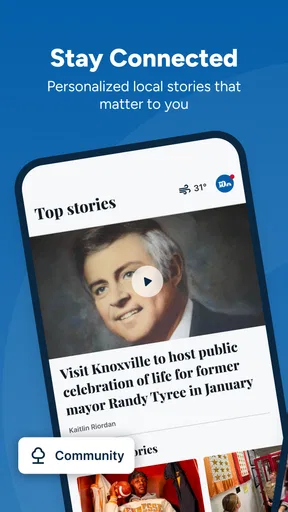
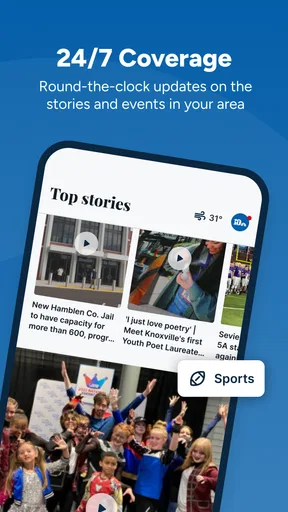
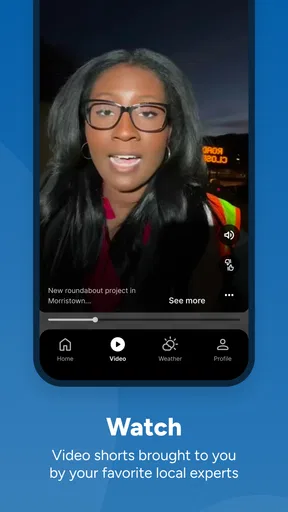
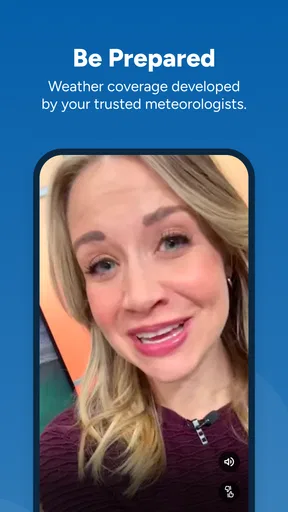
 Analysis by AppCompare
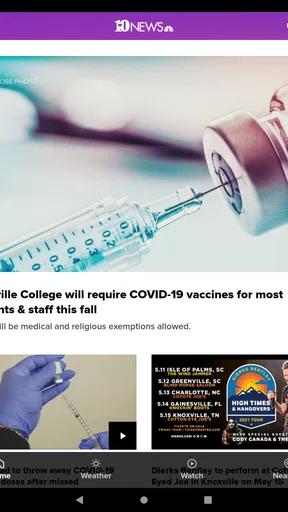
I installed Knoxville News from WBIR to see whether it works as a practical local-news companion rather than just another headline feed. My first impression is that its purpose is refreshingly clear: it is built around Knoxville and East Tennessee, with news, video, and weather gathered in one place. That focus makes it more useful than a broad national news app when I want to understand what is happening close to home.
The app is developed by TEGNA and belongs to the news and magazine category. It is free to use, carries an Everyone age rating, and has reached over one hundred thousand installs. Those details make it easy to try without a financial commitment, but they do not automatically make it the right choice for every reader. The real question is whether a focused local app fits the way you already follow news.
How Knoxville News earns trust as a local source
Local coverage has a different value from a general news aggregator. National apps are good at showing many stories quickly, but they often leave me with a broad outline and little sense of how an event affects a particular community. Knoxville News starts from the opposite direction. Its usefulness comes from narrowing the field to Knoxville and East Tennessee, so the stories are more likely to connect with local travel, weather, public events, and daily routines.
I also appreciate that the app is tied to WBIR rather than presenting itself as an anonymous collection of articles. Knowing that TEGNA develops it gives the product a visible publisher behind the experience. That does not mean I would accept every report without thinking critically, but it gives me a clearer idea of where the coverage comes from and why the app is centered on this region.
The current average rating is 4.6 from around 3.9 thousand ratings, which suggests that many people find the app worthwhile. I treat that as a useful signal, not a guarantee. A local-news app can be highly valuable to someone living in the area and much less relevant to a person who only wants international headlines. The strong rating therefore makes the app worth testing, while its regional focus determines whether it belongs on your phone.
One trust advantage is that the app does not need to pretend to cover everything. A focused product can be judged by a more realistic standard: does it help me follow the place I care about? When I use it with that expectation, the experience feels more coherent than opening a general feed and searching repeatedly for Knoxville-related stories.
What the local focus changes in everyday use
A realistic example is a weekday morning when I am deciding whether to change my route, postpone an outdoor plan, or simply understand what is happening around town. Instead of switching between a national news app, a separate weather service, and video sites, I can begin with one regional destination. The benefit is not that every piece of information becomes more detailed; it is that the information is organized around the same place.
Worth Reading Before You Choose

EA SPORTS FC Mobile 26 Is a Bigger Football Game, but It Takes Time

Flipboard Shows What News Apps Must Do Beyond the Feed

Switching to Android Auto Means Rethinking Your Driving Routine

Google Calendar Makes a Crowded Week Easier to Manage

Ludo King Makes the Most of the Minutes Between Plans

Baby Panda World Brings Quick Play to Modern Phones, but Its Game Library Feels Busy
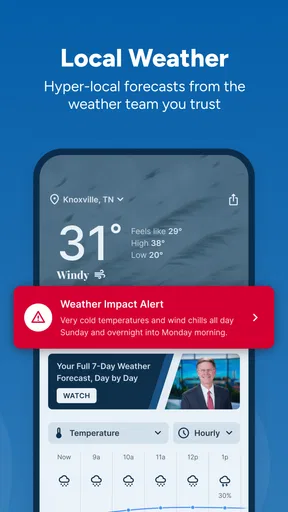
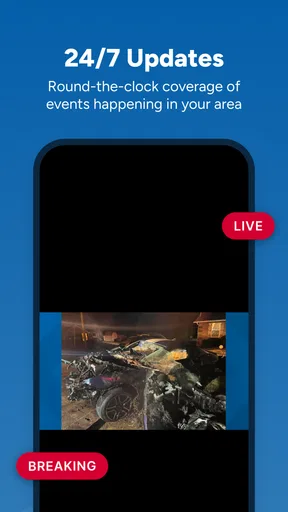
That combination of local news, video, and weather is especially practical during a developing situation. A written report may explain the background, a video may make the scene easier to understand, and weather information may provide immediate context for travel or outdoor plans. I would not treat those formats as interchangeable, but having them together reduces the friction of checking several unrelated apps.
There is also a useful habit hidden in the app’s narrow scope: I can use it as a first check, not necessarily my only source. I would read the local report, watch relevant video when I need visual context, and then compare important claims with official information when the decision involves safety, travel, or public services. That workflow keeps the app useful without asking it to replace every source.
Controls and choices I would examine before settling in
Because this is a free news app, I pay attention to the choices visible during setup and regular use. I look for whether the app asks for an account, whether location access is presented as optional or necessary, and whether notifications can be adjusted. Those are the controls that shape the relationship between a news app and its reader.
I do not assume that a permission request is harmless simply because the app is convenient. If a feature works without a particular permission, I prefer to leave that permission disabled. If I want weather or local updates, I would first check whether the app lets me select Knoxville or another area manually instead of granting continuous location access. That is a small but important privacy habit.
The same principle applies to notifications. Breaking local news can be useful, but constant alerts can turn a helpful app into a distraction. I would enable only the categories that matter to me, if those controls are offered, and silence the rest. A reader who checks news at specific times may be better served by opening the app manually rather than allowing every alert to interrupt work, school, or sleep.
Account controls matter too. I prefer to know whether an account is genuinely needed for reading, saving, commenting, or receiving updates. If the app allows ordinary browsing without registration, that lowers the barrier to trying it and limits the amount of personal information tied to routine reading. If an account is requested for a particular action, I would consider whether that action is valuable enough to justify it.
These are not accusations about Knoxville News; they are the checks I use with any free content app. A responsible review should separate what can be observed in the user experience from what would require a confirmed policy or permission list. I judge the app more favorably when choices are clear and avoidable requests are not treated as mandatory.
Where data sensitivity becomes important
News reading can reveal more than people expect. The stories I open, the videos I watch, the alerts I respond to, and the times I use the app can create a picture of my interests and routines. Local news can be particularly sensitive because the subjects are tied to a specific region. I therefore avoid treating a free download as completely costless: my attention and reading behavior may still be part of the broader value exchange.
Weather use adds another point to consider. If an app uses location to tailor weather information, I want the choice to be understandable. A precise location may be convenient, but a manually selected city can be enough for many people. I would also review the system permission screen rather than relying only on a quick setup explanation, because the operating system shows which access is actually being requested.
Video deserves a little caution as well. Video can consume more mobile data than text, especially when I am away from Wi-Fi. I would avoid autoplay if the app provides a setting to control it, and I would watch how much content loads while I am using cellular data. This is both a privacy and a practical concern: fewer background loads mean less accidental sharing of viewing habits and less unexpected data use.
Advertising is another reason to stay attentive in a free app, although I would not make assumptions about the exact advertising system without a clear disclosure. My approach is straightforward: I read the privacy information, check the app’s permission page, and use the operating system’s controls to limit access that is not needed. That gives me more control than simply accepting every prompt during installation.
For readers who are especially sensitive about data, the best approach is to use Knoxville News as a deliberate, limited-purpose tool. Open it when local coverage is useful, keep permissions narrow, and avoid creating an account unless a specific feature makes it worthwhile. That does not eliminate every possible data concern, but it reduces unnecessary exposure while preserving the app’s main benefit.
How I would build a reliable reading routine
I would not use this app by endlessly scrolling without a plan. Its strongest role is as a regional checkpoint. In the morning, I would scan the main local stories and weather. If something affects my route or plans, I would open the related report and look for video or additional context. Later, I might return for developments instead of leaving notifications active all day.
This approach also helps separate urgent information from interesting information. A weather update may affect a decision immediately, while a longer local story may deserve more time when I am not in a hurry. Keeping those uses distinct makes the app feel less noisy and helps me avoid reacting to a headline before understanding the story.
When I encounter a report involving safety, health, closures, or public instructions, I would use the app as an entry point and verify the operational details through the relevant official channel. Local journalism can explain what is happening, but an official source may provide the exact instructions or current status I need. That is not a weakness unique to this app; it is a sensible habit for any news service.
For families, the Everyone rating makes the app broadly approachable, but I would still guide younger readers through local stories that may involve distressing events. An age label is useful for general suitability, yet it cannot predict how every person will react to breaking news. Parents may prefer to manage notifications and decide when children browse independently.
Where it beats broader alternatives—and where it does not
Compared with a national news aggregator, Knoxville News wins on relevance. I do not have to filter through international politics, celebrity stories, or unrelated regional coverage before reaching news from Knoxville and East Tennessee. That focus saves time when local awareness is my priority.
Compared with a social-media feed, it should also offer a calmer starting point for reporting. Social platforms can surface eyewitness material quickly, but they mix confirmed reporting with commentary, repetition, and speculation. A dedicated local-news app gives me a more direct route to coverage from a named regional publisher. I would still verify fast-moving claims, but I prefer not to make a social feed my only source.
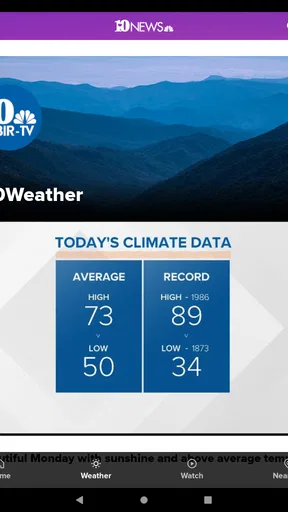
Compared with a weather-only app, Knoxville News is less specialized. Someone who needs radar tools, detailed forecasts, severe-weather controls, or extensive historical information may be happier with a dedicated weather service. The appeal here is convenience: weather sits alongside local reporting rather than replacing a specialist forecast product.
Compared with reading WBIR coverage only through a mobile browser, the app may feel more convenient for repeated local checks because it is already installed and organized as a dedicated destination. On the other hand, a browser can be preferable for people who want fewer installed apps, easier cross-site comparison, or tighter control over what runs on the device. I would choose the app for routine access and the browser for occasional visits or broader research.
The trade-off is specialization. Knoxville News is not the right replacement for a national newspaper app, a world-news service, or a professional weather tool. It works best beside those services, not necessarily instead of them. That distinction is important because a high rating does not change the app’s regional purpose.
Performance expectations and practical friction
The app supports devices running Android 7.1 or later, which makes it accessible to people using older Android phones as well as newer models. Its current version is 50.23.2, so I would keep it updated through the normal app store process. Updates matter for compatibility and security, but I would still review any new permission prompts after an update rather than approving them automatically.
As with many content-heavy apps, the experience depends on network conditions. Text may remain manageable on a weak connection, while video can take longer to load or use more data. If I were commuting through unreliable coverage, I would treat video as an optional layer and rely on the written reporting until the connection improves. That makes the app more practical than assuming every part of it will behave equally well everywhere.
Another possible friction is the pace of breaking news. A local app can be valuable precisely because events change quickly, but that also means an early report may later be updated. I would check the story again before acting on important details, especially when a headline concerns closures, emergencies, or changing weather. The app can help me stay informed, but it cannot remove the need for judgment.
I would also watch how much the app encourages me to return through alerts or repeated prompts. Frequent engagement is not automatically bad, yet I prefer a news routine that serves my schedule instead of controlling it. If the available settings let me reduce interruptions, I would use them immediately. If not, the operating system’s notification controls become the practical fallback.
Who should install it, and who should skip it
I would recommend Knoxville News to residents of Knoxville and East Tennessee who want a single regional place for reporting, video, and weather. It is also a sensible choice for former residents, family members, students, or people planning time in the area who want local context rather than a generic national feed.
I would be more cautious about recommending it to someone who lives far outside the region and only wants broad headlines. The local focus may make much of the content irrelevant. Likewise, readers who already have a carefully chosen local-news routine may not gain enough from adding another app unless the combined news, video, and weather format genuinely saves them time.
People who want extremely detailed weather analysis should pair it with a specialist service. Readers who avoid apps with notification systems or who prefer browser-based access may also find a mobile website more comfortable. And anyone making a high-stakes decision should use the app for context while checking the responsible official source for instructions and current details.
My cautious verdict after using it
Knoxville News from WBIR is a focused, useful local-news app rather than an all-purpose information hub. I like the way its regional identity gives the experience a clear purpose, and the combination of reporting, video, and weather is genuinely convenient for everyday planning. The free price and Everyone rating make trying it simple, while the strong average rating indicates that it has earned a positive response from many users.
My recommendation comes with a privacy-minded condition: I would review permissions, keep location access limited unless it is clearly needed, control notifications, and avoid creating an account without a reason. Those choices let me benefit from local coverage without handing over more access or attention than necessary.
In the end, I see it as a good first stop for Knoxville and East Tennessee news, not a complete replacement for every other source. Its best use is deliberate: check the local picture, use video when visual context helps, consult weather when planning the day, and verify important instructions elsewhere. If your priority is trustworthy local awareness with sensible user control, this app is worth trying; if you need national breadth or specialist tools, keep looking beyond it.
Pros
- Fast access to breaking news across Knoxville and East Tennessee.
- Live video coverage helps users follow major local events as they unfold.
- Weather forecasts and alerts are useful for planning around changing conditions.
- Push notifications can keep users informed about urgent local developments.
- News categories make it easy to browse sports
- traffic
- and community stories.
Cons
- Some stories may require scrolling through advertisements before reaching the content.
- Frequent notifications can feel excessive unless alert settings are customized.
- Video playback may use significant mobile data when watched over cellular networks.
- Coverage is strongly focused on the Knoxville area and may feel limited elsewhere.
- App performance can vary depending on connection quality and device age.
FAQs for Knoxville News from WBIR
What is Knoxville News from WBIR?
Knoxville News from WBIR is the official news app from WBIR-TV, serving Knoxville and the surrounding East Tennessee area. It provides access to local and regional reporting, breaking news alerts, weather updates, live newscasts, traffic information, sports coverage, and community stories. The app is designed for readers who want WBIR’s reporting in a convenient mobile format.
What type of content can I find in the WBIR Knoxville News app?
The app covers a broad range of topics, including breaking local news, crime and public safety, politics, education, health, business, entertainment, sports, and community events. Users can also find weather forecasts, radar information, traffic updates, video reports, and live coverage when important events are happening in Knoxville or elsewhere in East Tennessee.
Does Knoxville News from WBIR send breaking news and weather alerts?
Yes, the app can send push notifications for breaking news, severe weather, major traffic incidents, and other important local developments. Notifications are useful when you need fast updates, especially during storms or emergencies. However, you can usually manage alert categories and disable notifications in the app or your device settings if you prefer a quieter experience.
Can I watch live news and video reports through the app?
WBIR’s app includes video content such as recorded news reports, interviews, weather segments, and other station-produced programming. Live video may also be available during scheduled newscasts or significant breaking-news events, although availability can depend on the broadcast schedule, location, internet connection, and technical conditions. A reliable Wi-Fi or mobile-data connection is recommended.
Is Knoxville News from WBIR free to download and use?
The app is generally free to download and provides access to WBIR news, weather, videos, and alerts without requiring a subscription for basic use. As with many local news applications, it may display advertising, and some features can depend on internet access or device compatibility. Mobile data charges may apply when using cellular data, particularly for live video and frequent updates.


